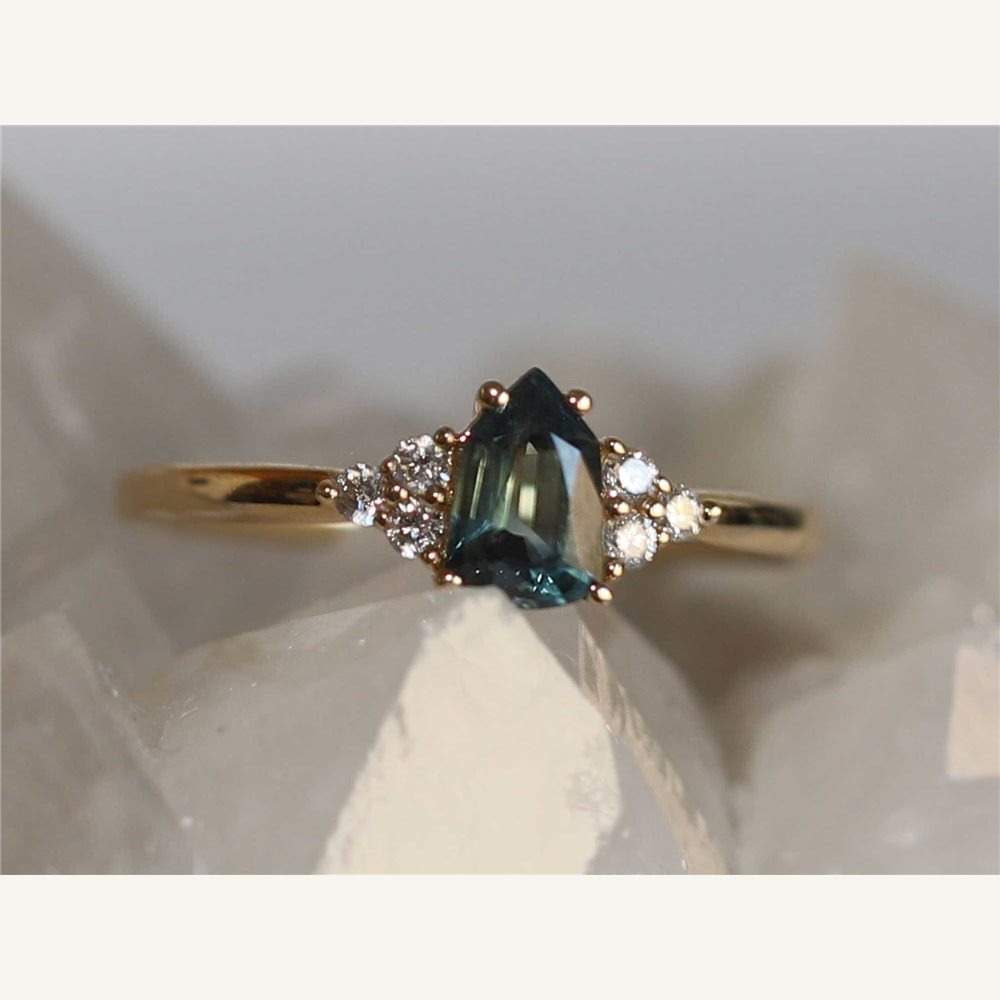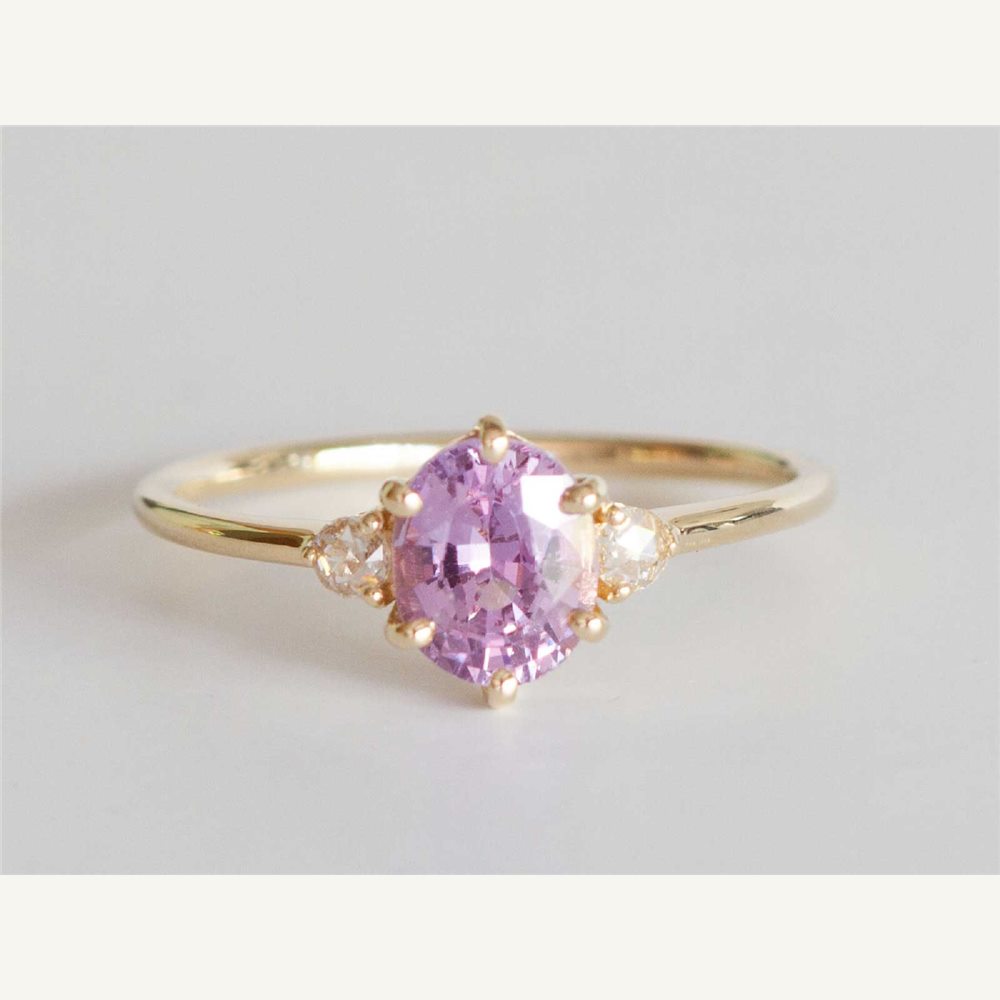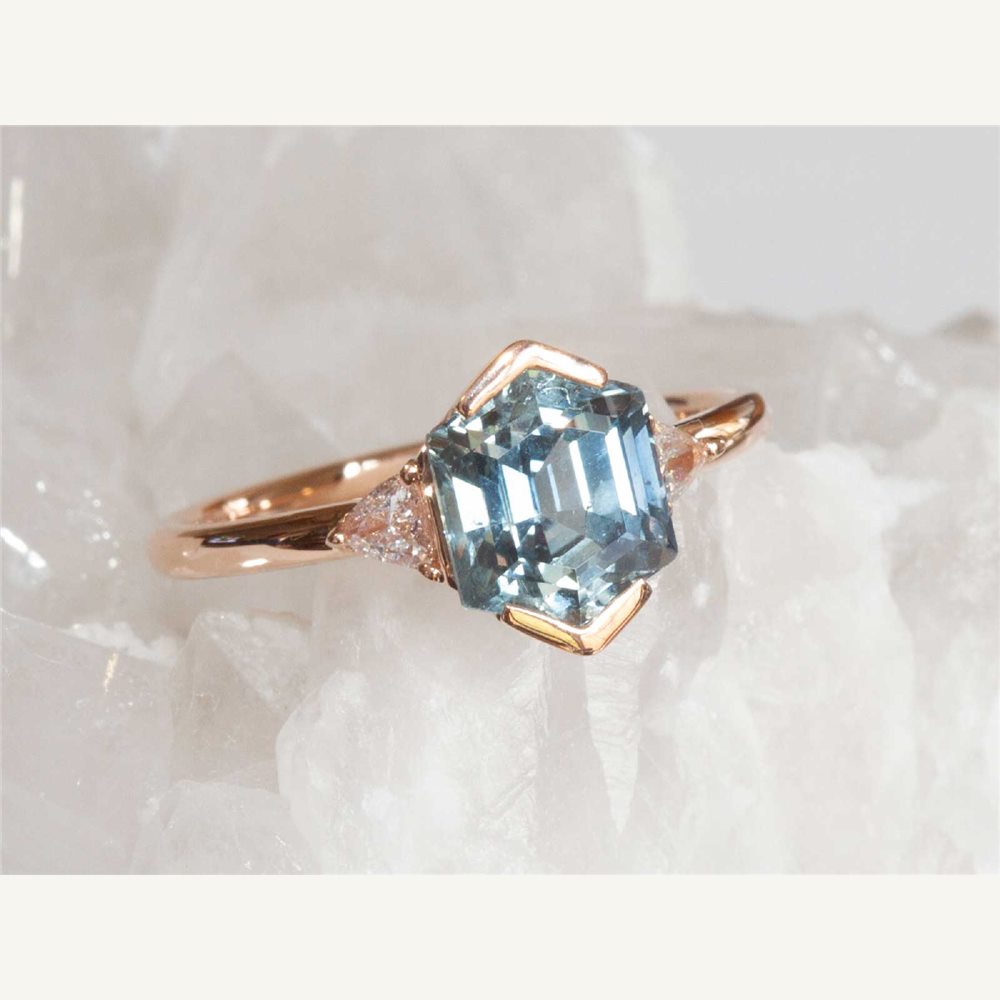
01 · Begin with colour
Notice the colour world that already belongs to them.
Look at jewellery, clothing, interiors and objects the wearer returns to. Are the colours deep and oceanic, pale and quiet, warm and earthy, neutral and graphic, or genuinely mixed? A natural gemstone does not need to match one colour chip; it needs to feel coherent with the person.
View shortlisted stones in more than one kind of light. Teal and parti sapphires can shift across blue and green. Opal can reveal different colours as it moves. A photograph should begin the conversation, not finish it.
02 · Be honest about wear
Design for ordinary Tuesdays as well as the proposal.
Ask how often the ring will be worn, what the wearer does with their hands, whether gloves are common, and whether they are comfortable removing jewellery for physical work. This can influence gemstone choice, setting height, edge protection, band width and maintenance expectations.
Sapphire is a strong everyday ring stone. Opal can work beautifully for a careful wearer with an appropriate setting. Diamond offers excellent scratch resistance but still depends on its inclusions, cut and setting. No engagement ring is maintenance-free.
03 · Choose stone and shape together
The cut changes colour, proportion and personality.
Oval, pear and round stones can feel softly familiar; hexagons, shields and trilliants can create an architectural direction. An unusual outline may need a setting designed specifically around it rather than adaptation into a standard mount.
With natural colour, cut also influences how tone and zoning appear. Ask whether a stone becomes too dark in some conditions, whether a pale stone maintains its character, and whether the shape works from the side as well as the top.
- Review face-up colour and side profile.
- Consider edge and point protection for pears and geometric cuts.
- Ask how a wedding band may sit beside the engagement ring.
04 · Setting and metal
Support the stone without losing the design’s point of view.
Yellow, rose and white gold can change the perceived warmth and contrast around a coloured centre stone. The right choice may come from the wearer’s existing jewellery, skin tone preferences and the visual relationship with any accent diamonds.
Setting decisions are both visual and practical. Discuss protection, cleaning access, ring height, snagging, future resizing and wedding-band fit before approving the design. A delicate appearance still needs enough structure for the proposed stone and wear pattern.
05 · Budget and facts
Define the comfortable investment, then ask precise questions.
Set a total budget that includes the centre stone, side stones, metal, setting and craftsmanship. A smaller stone with compelling colour and a considered design may create a stronger ring than maximising dimensions alone.
Ask what is documented about origin, treatment and grading; what is visually assessed by the studio; and what remains unknown. Confirm size, price, production timing, shipping, duties, returns, resizing and care before committing. The goal is not to collect technical language—it is to understand the exact piece you are buying.
06 · Build the brief
Bring a point of view, not a finished technical drawing.
A useful first brief can be simple: occasion, colour direction, design feeling, comfortable budget, metal preference, timing, location and two or three saved pieces. Explain what you like in each rather than asking for a copy.
The Divine Elements bespoke builder turns those choices into a private summary. The concierge can then help identify unanswered questions before the studio confirms stone options, feasibility, quote and schedule.