01 · Why opal
The colour changes because the stone is part of the moment.
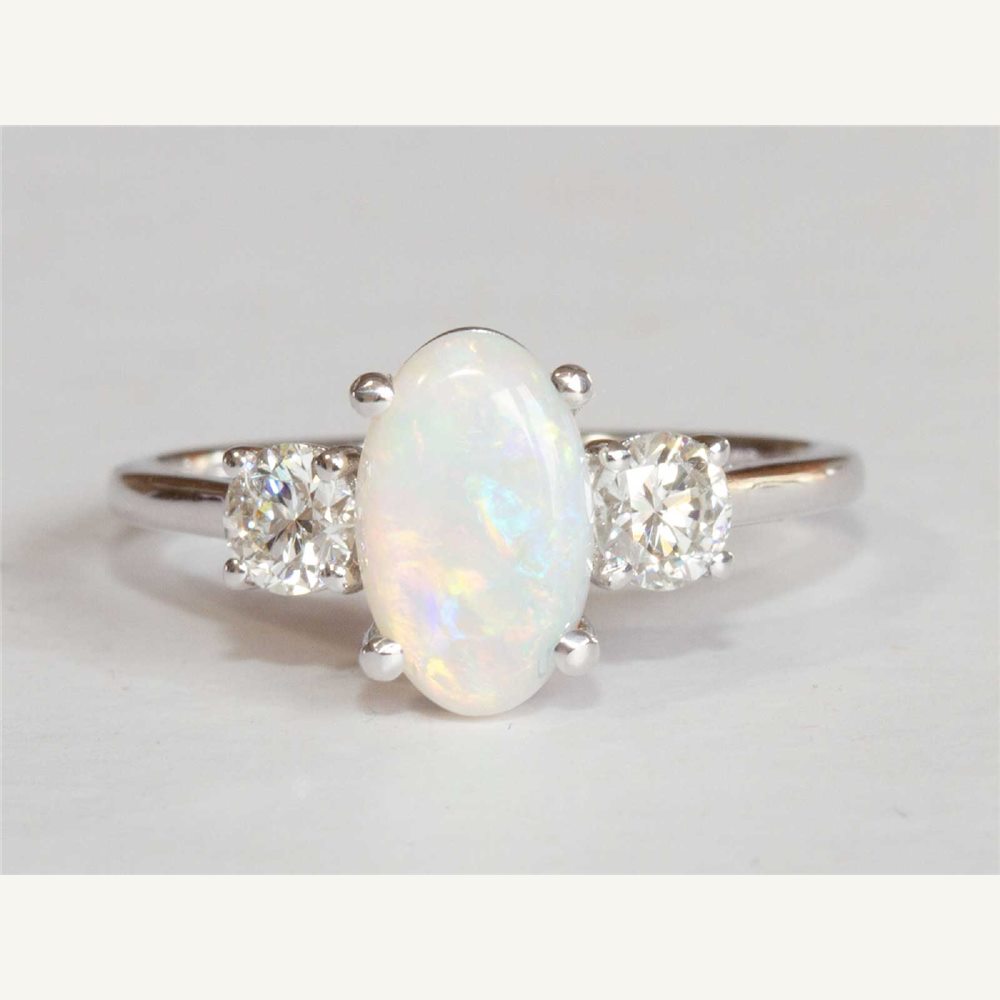
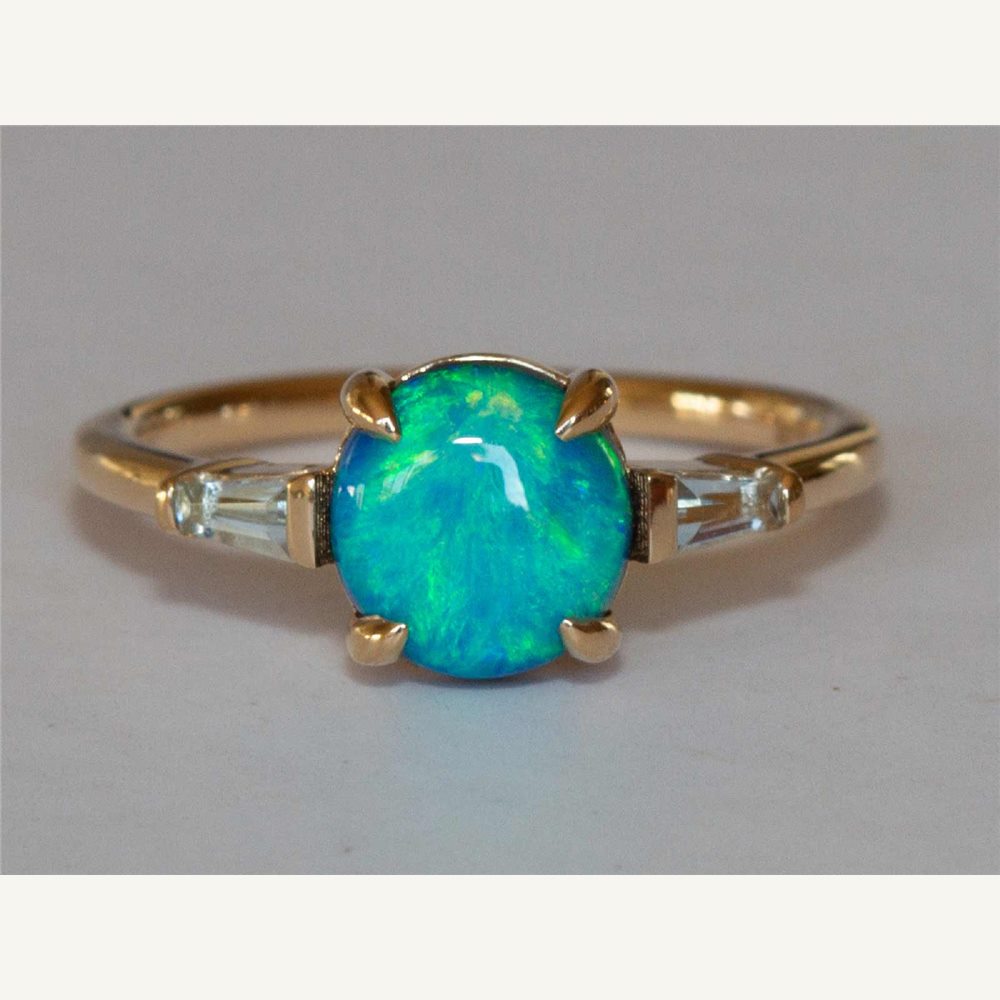
Precious opal can reveal play-of-colour as the stone, light or viewer moves. That shifting response makes a photograph useful but incomplete: pattern, body tone, brightness and the distribution of colour need to be considered in motion.
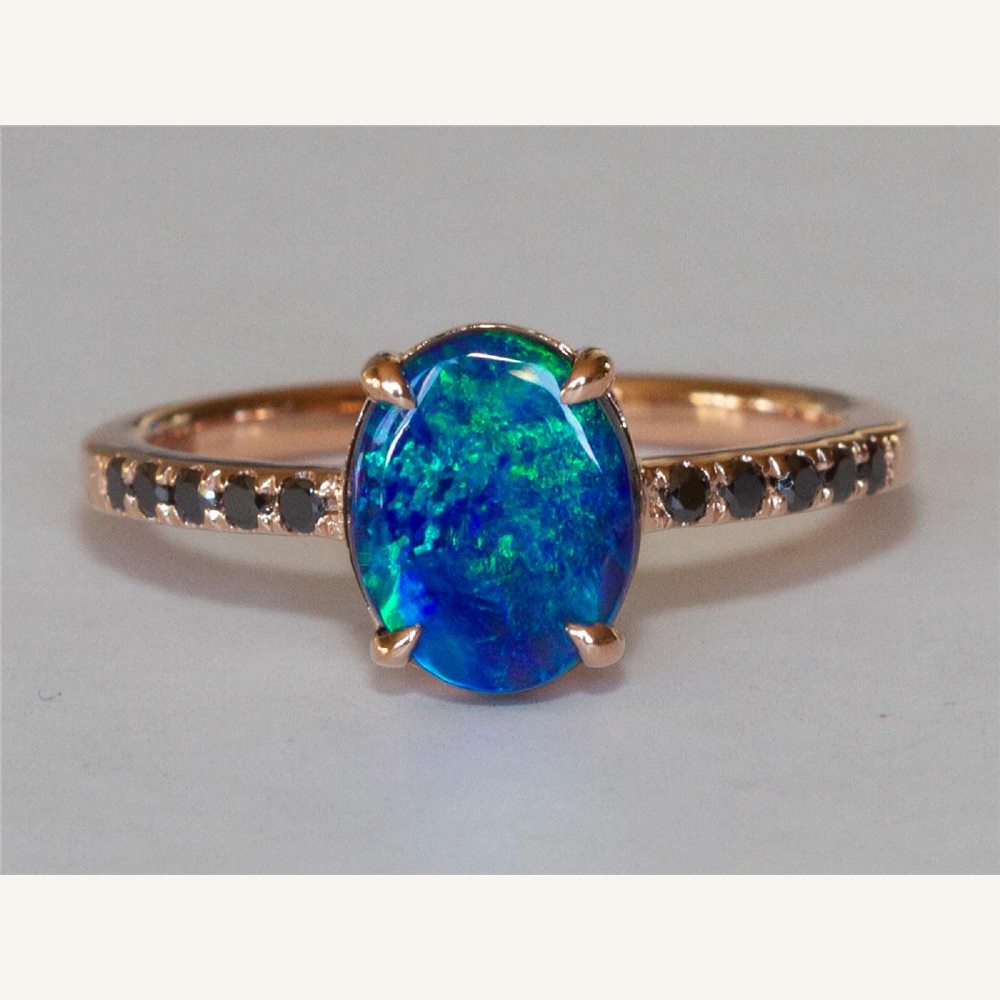
Lightning Ridge in New South Wales is renowned for opal, particularly black opal. NSW Government material describes it as one of Australia’s most important opal centres. Origin is meaningful, but it does not replace assessment of the individual stone’s condition, pattern, colour and suitability for the proposed setting.
02 · Durability
Beautiful enough for a ring does not mean carefree.
GIA advises that opal is not as hard as many other gems and is vulnerable to scratches and chips. It recommends protective settings for people who are tough on their jewellery and characterises opal as something beautiful that requires more care.
This does not rule out an opal engagement ring. It changes the design conversation. Consider how often you want to wear it, what your hands do each day, whether you are willing to remove it for physical tasks, and how much metal protection can be introduced without obscuring the stone.
- Avoid exposed edges where the design and stone allow.
- Remove the ring before impact, sport, gardening, cleaning and gym activity.
- Store it separately so harder jewellery cannot scratch or strike it.
- Stop wearing the ring if the setting feels different or the stone shows a change.
03 · Black, white and lighter body tones
Body tone changes the stage on which colour appears.
Black opal has a dark body tone that can create strong contrast with play-of-colour. White or lighter-body opal can feel luminous and airy. Neither description guarantees brightness, pattern or value; those qualities must be judged in the individual gem.
Ask to see the opal moving in neutral light. Look across the whole face rather than one flash. Consider whether the pattern still interests you from the angles you will actually see when the ring is worn.
04 · Care
Avoid heat extremes, harsh chemistry and assumed cleaning methods.
GIA notes that moisture loss caused by heat or excessive dryness can contribute to crazing in some opals. The Divine Elements care policy also advises removing jewellery around chemicals and physical work and does not recommend ultrasonic cleaning for gemstones generally.
Do not improvise a cleaning routine from advice written for a different stone. Ask the studio to confirm the right method for the exact opal, setting, supporting stones and metal. Arrange regular setting checks and professional care.
05 · Is it right for you?
Choose opal for attention, ritual and individuality.
An opal ring can be right for someone who is captivated by moving colour and comfortable treating the ring as precious rather than indestructible. It may be less suitable for someone who never wants to remove an engagement ring, works heavily with their hands or prefers minimal maintenance.
There is no loss in choosing a sapphire for everyday resilience and reserving opal for another meaningful piece. The strongest choice is the one that fits the wearer’s life as honestly as it fits their taste.